
Modern farms cover large areas, often making nighttime security a major challenge. Valuable crops, livestock, equipment, irrigation systems, and storage facilities can be vulnerable to theft, trespassing, wildlife intrusion, and other security risks. Traditional security methods such as physical patrols and fixed cameras may not provide complete coverage across expansive agricultural properties.
Nighttime farm security with monitoring and drone response offers a smarter approach by combining surveillance technology, real-time monitoring, and rapid aerial response.
Why Nighttime Farm Security Matters
Farms can become difficult to monitor after dark because of limited visibility and large open areas. Unauthorized individuals or animals can enter through remote boundaries that may be difficult to inspect manually.
Common nighttime farm security concerns include:
- Unauthorized entry and trespassing
- Crop and equipment theft
- Livestock monitoring
- Wildlife intrusion
- Damage to irrigation infrastructure
- Suspicious activity around storage areas
- Fires and other emergency situations
- Security of isolated farm buildings
An integrated monitoring system can help identify potential threats earlier and support a faster response.
Smart Monitoring for Agricultural Properties
Modern farm security systems can combine multiple technologies to provide continuous visibility. Fixed cameras, thermal imaging, motion detection, sensors, and centralized monitoring can work together to identify unusual activity.
When a potential security event is detected, the system can generate an alert for the security team or farm operator. This allows personnel to assess the situation before sending a physical team to the location.
Drone Response for Rapid Area Inspection
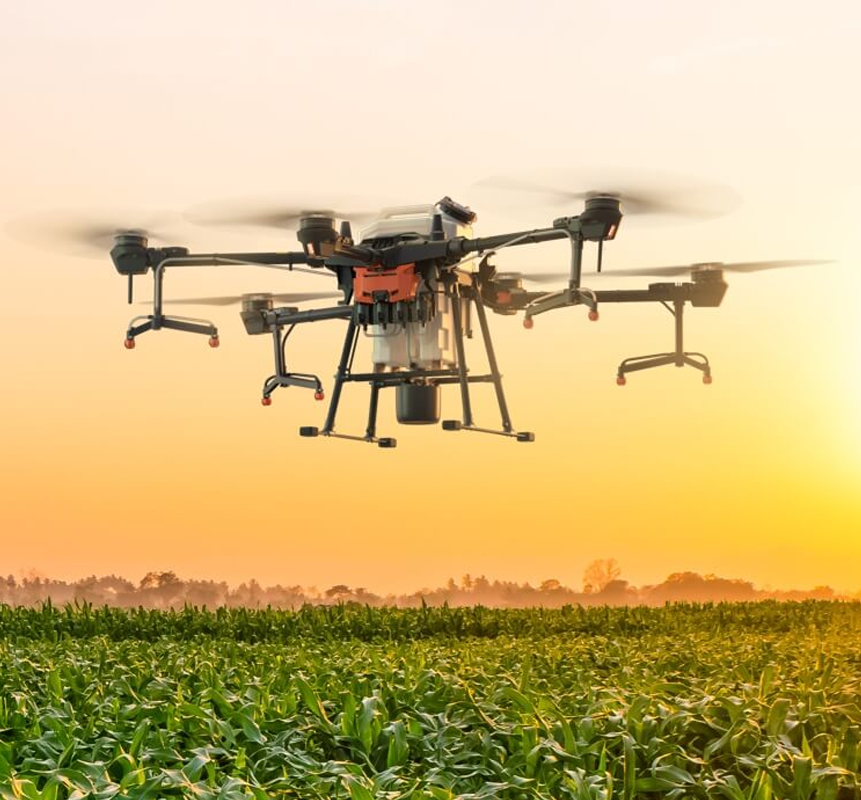
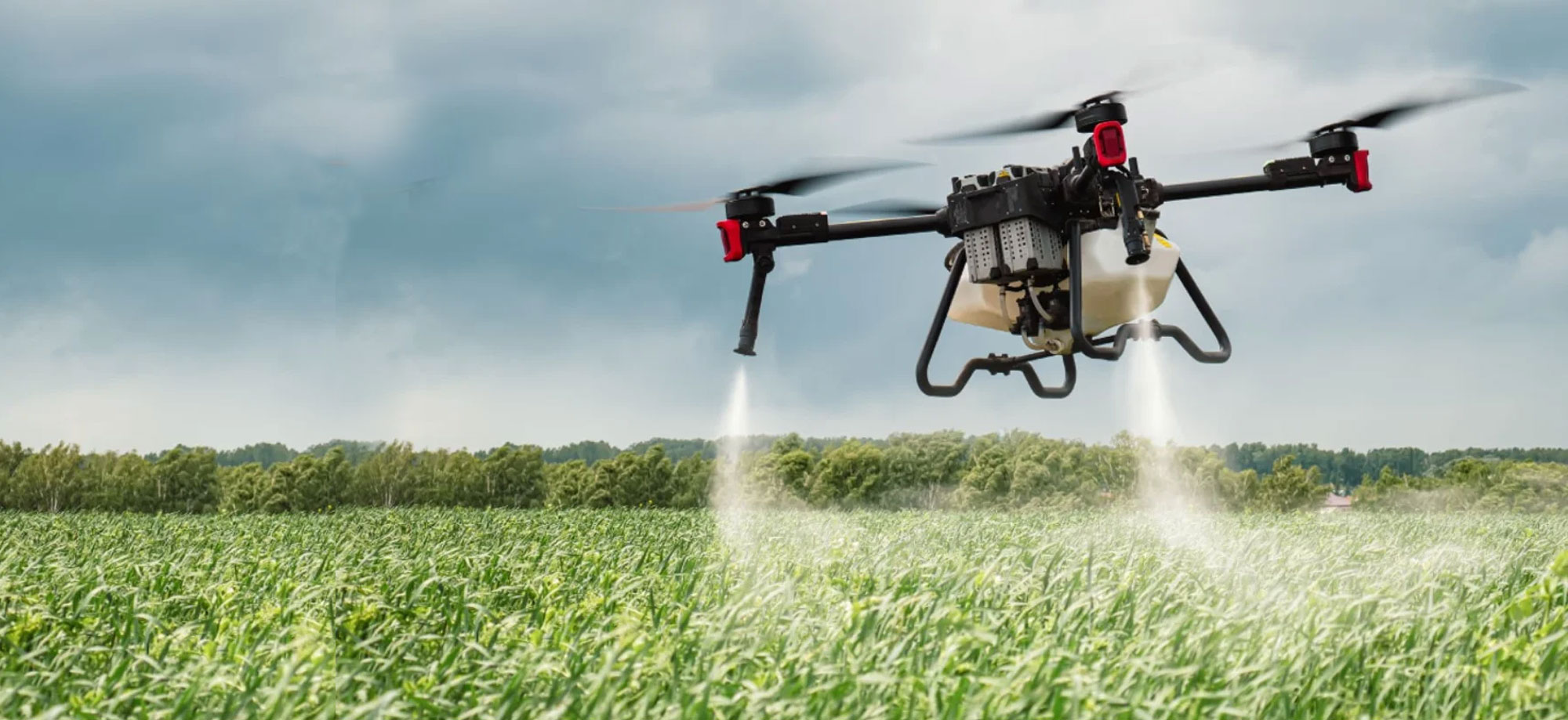
Drones can provide an additional layer of security by quickly reaching areas that may be difficult or time-consuming to inspect on foot or by vehicle.
A security drone can be deployed to investigate an alert and provide an aerial view of the affected area. Depending on the drone configuration, it may use high-resolution cameras, thermal cameras, night-vision capabilities, GPS positioning, and real-time video transmission.
This can help security personnel understand what is happening before deciding on the next response.
Thermal Imaging for Nighttime Surveillance
Thermal cameras can be particularly useful for nighttime farm monitoring. Instead of depending entirely on visible light, thermal imaging detects heat differences between objects and their surroundings.
This technology can assist in identifying:
- People moving through fields
- Animals entering restricted areas
- Vehicles approaching farm boundaries
- Hot spots that may indicate fire risks
- Activity around buildings and equipment
Thermal imaging can complement conventional cameras to provide additional visibility in low-light conditions.
Real-Time Video Streaming and Remote Monitoring
A major advantage of drone-based farm security is the ability to transmit live video to a remote monitoring station.
Security personnel can observe the drone’s camera feed while it is inspecting a specific location. This provides real-time situational awareness and reduces the need to immediately send personnel into potentially unsafe or unknown areas.
For farms with multiple fields or distant facilities, remote monitoring can make security operations more efficient.
Automated Alerts and Drone Deployment
An advanced farm security solution can connect sensors, cameras, monitoring software, and drones into a coordinated system.
A typical security workflow may include:
Detection → Alert → Verification → Drone Deployment → Live Monitoring → Response
For example, if a perimeter sensor detects movement during the night, the monitoring system can notify an operator. The operator can then verify the event using nearby cameras and, where appropriate, deploy a drone to inspect the location.
This approach helps reduce unnecessary physical patrols while improving visibility over large agricultural areas.
Protecting Crops, Livestock and Farm Assets
Nighttime drone surveillance can support the protection of multiple farm assets, including:
Crop Protection
Aerial monitoring can help identify unauthorized activity in fields and along farm boundaries.
Livestock Monitoring
Thermal and low-light cameras can assist in checking livestock locations and identifying unusual movement.
Equipment Security
Tractors, harvesting equipment, generators, pumps, and other valuable machinery can be monitored around storage and operating areas.
Infrastructure Protection
Drones can inspect irrigation systems, warehouses, fencing, solar installations, and remote farm buildings.
Beyond Security: Emergency Response
Drone technology can also support emergency situations on farms. Aerial inspection can help operators assess incidents such as fire, equipment failure, flooding, or unexpected activity.
A drone can provide an aerial perspective that may not be available from ground-level cameras, helping teams understand the scale and location of an incident.Benefits of Drone-Assisted Farm Security
Integrating drones with nighttime monitoring can provide several operational benefits:
- Wide-area coverage: Monitor large agricultural properties efficiently.
- Rapid response: Reach remote areas faster than ground patrols.
- Nighttime visibility: Use thermal and low-light imaging technologies.
- Real-time intelligence: Stream live aerial video to monitoring teams.
- Reduced patrol requirements: Support security personnel with aerial inspection.
- Flexible deployment: Inspect different areas based on changing security needs.
- Improved situational awareness: Provide an aerial perspective during incidents.
Building the Future of Smart Farm Security
The future of agricultural security is moving toward connected systems that combine AI-enabled monitoring, autonomous drones, thermal imaging, sensors, GPS, and real-time communication.
Rather than relying on a single security technology, farms can use multiple systems that work together to detect, verify, monitor, and respond to potential threats.
With the right technology and operating procedures, drone-assisted nighttime surveillance can become an important component of a modern farm security strategy.
Conclusion
Nighttime farm security requires more than traditional patrols and fixed surveillance cameras. Large agricultural properties need solutions that can provide broad coverage, rapid inspection, and reliable visibility in challenging conditions.
Drone response combined with real-time monitoring, thermal imaging, sensors, and intelligent surveillance can provide a powerful additional layer of protection for modern farms.
As agricultural technology continues to evolve, smart drone-based security systems can help farms improve situational awareness, protect valuable assets, and respond more efficiently to nighttime security events.